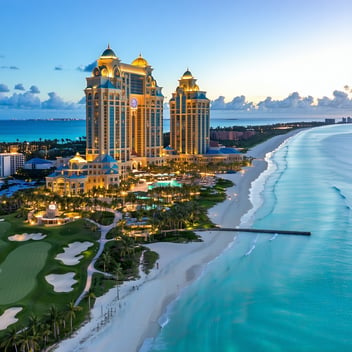
Bahamas permanent residency is a lifelong right to live in The Bahamas, and the most common route for private investors runs through real estate. This guide sets out the requirements, the real costs and the process for 2026, based on the rules published by the Bahamas Department of Immigration and on CPH Investment Group's own experience with applications in Freeport, Grand Bahama.
What Bahamas permanent residency gives you
A Certificate of Permanent Residence is issued for the holder's lifetime unless it is revoked, according to the Bahamas Department of Immigration. Revocation is governed by Section 18 of the Immigration Act. In practice, this means:
- A permanent right to reside in The Bahamas, without annual renewals.
- No minimum stay requirement. You do not have to spend a set number of days in the country to keep your status.
- Access to a jurisdiction without personal income tax, capital gains tax or inheritance tax.
- The option to apply for Bahamian citizenship after ten years.
The often-quoted "90 days" does not describe a presence requirement. It refers to the issuance of the Permanent Residency Certificate once a person has been in the country for more than 90 days. The certificate itself remains in force for life.
The three residency routes for property owners
Investors usually choose between three routes. They differ in investment level and in how long the status lasts.
- Home Owner's Residence Card: available to owners of a residential property in The Bahamas. It is renewed annually and suits buyers who want a foothold first.
- Economic Permanent Residence: requires a minimum investment of USD 1.0 million in real estate or in zero-coupon bonds of the Central Bank of The Bahamas, held for at least ten years (Department of Immigration). Status is lifelong.
- Fast-track permanent residency: larger investments qualify for accelerated consideration. Based on the current practice of the attorneys CPH works with, the threshold is USD 2.5 million. Published figures have shifted over the years, as The Tribune documented, so confirm the current level with your attorney.
You do not have to invest USD 1 million at once
The USD 1 million threshold is often read as a single payment. In practice, many investors build it in stages. First, they buy a building plot. Then they plan a project on it whose total value exceeds USD 1 million. Only then do they file the application. This staged path makes permanent residency accessible to a wider group of investors and keeps capital flexible during planning.
Costs: what an application really costs
The Department of Immigration charges a non-refundable processing fee of USD 200 at submission. The larger items follow on approval and from the professional work around the file. Based on CPH's experience with applications in Freeport in 2026:
- Government fee on approval: USD 25,000, paid once.
- Attorney, registry and notary costs: roughly the same amount again.
- Annual fee: none. Permanent residency carries no recurring government charge.
The property purchase itself has its own closing costs, including stamp duty and legal fees. We have broken these down in Closing Costs in the Bahamas.
Documents required
The Department of Immigration lists the following core documents for an economic residence application:
- A letter of request addressed to the Director of Immigration.
- The notarized application form with a Bahamian postage stamp affixed.
- A medical certificate issued within 30 days of submission.
- A police certificate issued within the last six months, covering five years of residence.
- Passport copies and two passport photographs.
- Birth certificate and, where applicable, marriage certificate and family documents.
- Two character references with contact details.
- Proof of the qualifying investment, such as conveyance documents.
Foreign documents must be apostilled or legalized and accompanied by certified English translations. For applicants from Germany, Austria or Switzerland, this step alone often takes several weeks and should be started early.
Why Freeport, Grand Bahama
Freeport lies inside the Grand Bahama free trade zone. Under the Hawksbill Creek Agreement, licensees benefit from concessions that run to 2054, including duty-free import of building materials (overview). These concessions apply within the Grand Bahama free zone only, not across all of The Bahamas. Land prices are also considerably lower than in Nassau, which makes the staged route easier to execute. Our article Freeport Free Trade Zone: What Buyers Must Verify explains what to check before buying.
The statements in this guide refer to Freeport and the Grand Bahama special economic zone. Handling on other islands, including Nassau, can differ. There, a local attorney is the right point of contact.
Residency is not the same as tax residence elsewhere
The Bahamas does not tax personal income. However, residency in The Bahamas does not by itself end tax liability in your home country. As long as your residence or center of life remains there, you stay taxable there. US citizens remain subject to US taxation in any case. Our guide to tax and residency for US and Canadian investors covers this in more detail. Clarify your individual position with a qualified tax advisor before you move.
How the process works with CPH
CPH Investment Group is based in Freeport. Founder Christoph Albeck has lived on Grand Bahama since 2020 and holds Bahamas permanent residency through a property investment himself. The process typically runs in four steps: an initial call to assess fit, a review of budget and timeline, a site visit in Freeport to see plots and projects, and finally the application, which is filed by a licensed Bahamian attorney. Advice is available in English and German.
If you are weighing Bahamas permanent residency through real estate, you can request our investor information below. We will come back to you with the documents that match your situation.
This article is for general information only and does not constitute investment, tax or legal advice. It is not an offer to sell or a solicitation of an offer to buy any security or any interest in any property. Immigration rules and fees can change; tax treatment depends on individual circumstances and must be confirmed with qualified advisors.